

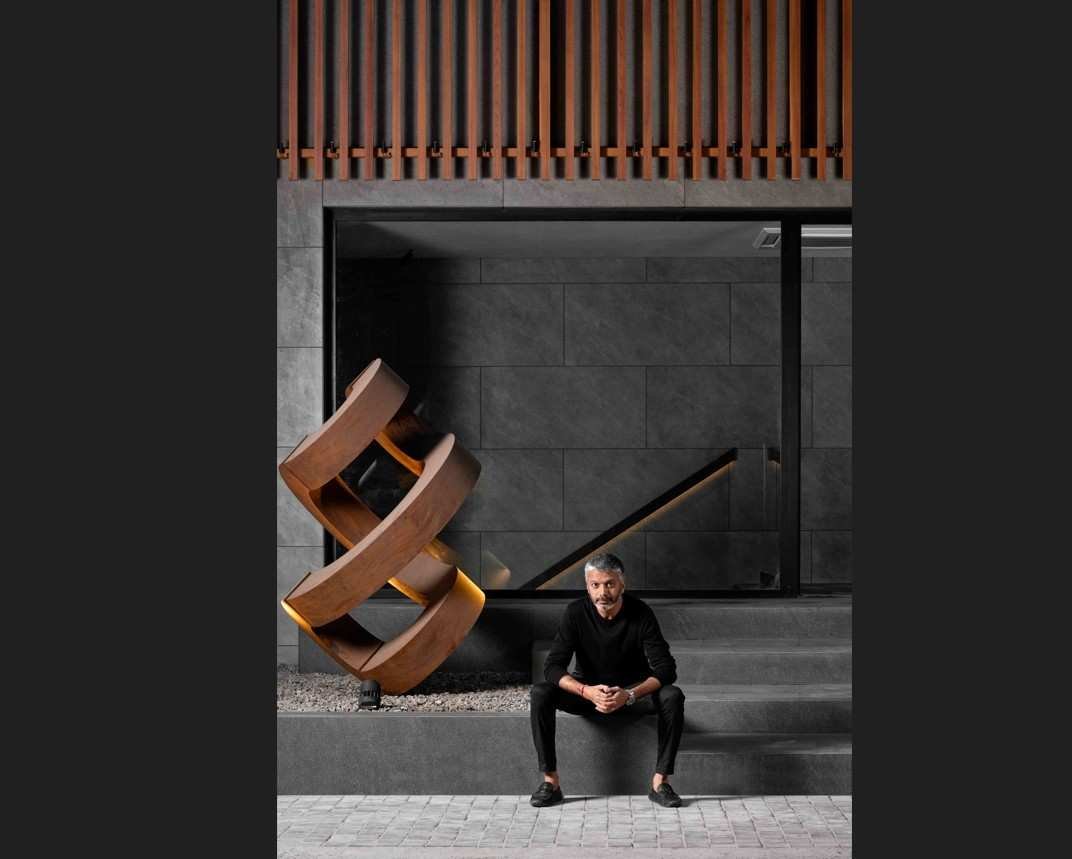
This notion-that a building’s façade is more than an aesthetic gesture-has been the driving principle in my near twenty-year journey in architecture. It represents the first dialogue with the environment, a protective layer, and the most significant tool for sustainability. Long before sustainability became a broadly discussed subject, I realized the skin of the building could be its environmental engine, influencing energy consumption and comfort levels as well as the overall ecological footprint.
My practice, Cityspace’82 Architects, started in 2005 as a small, solo endeavor driven by a childhood passion for design. Until today, I have been fortunate enough to design residences for several personalities like Yuvraj Singh and Gautam Gambhir, besides several architectural projects that have given me leeway to experiment with eclectic styles. But across all these projects, one philosophy has stayed constant: a building should convey its idea through the honesty of its design rather than relying on strong theoretical discourses. A building should speak through its presence, its performance, and the experience it generates.
A facade, if understood deeply, is a living system responding to climate, context, and user needs. Thus, its design influences how a building negotiates sunlight, wind, and temperature. It defines how much energy the structure will require and how comfortable its inhabitants will feel. Considering this, the façade becomes an active mediator-a well-crafted one that can reduce demands for artificial heating, cooling, and lighting. This becomes particularly important given the varied climatic conditions in India. In hot and arid regions, shading devices and ventilated skins play a vital role in reducing heat gain. In humid zones, comfort is raised by facades that allow airflow. For colder climates, glazing strategies that maximize passive solar gain become essential. Climate-responsive design, therefore, is not an academic theory but a dire necessity that allows buildings to work with nature rather than against it.
Materiality also plays a defining role in the sustainability of facades. Choosing materials that perform well over time, require minimal maintenance, and leave a lighter environmental imprint is integral to responsible architecture. Natural stone, terracotta, recycled metals, and high-performance glass-all have their place, depending on the context and concept of the project at hand. It’s not just about the material but how it’s layered, textured, and knitted together. What interests me is how different elements come together in harmony-deep shadows and sleek glass, rough stone and delicate screens-creating compositions in which aesthetics and performance blend with ease.
As technology evolves, facades are becoming smarter and more adaptive. Dynamic glazing that responds to sunlight, kinetic louvers that react to temperature, and parametric screens that regulate daylight are all examples of how the envelope of a building can be intelligent and responsive to environmental changes. However, technology alone does not make a building sustainable; it must fall in with user lifestyle and long-term maintenance, aligning itself with the soul of the project. My design approach has always been rooted in the understanding of the client’s needs-the standing in their shoes, the absorbing of their routine, and shaping of a space reflecting them. A facade, too, should translate this individuality while upholding environmental responsibility. Design, ultimately, is an equilibrium. An efficient facade does not have to be visually restrained, nor does a bold facade have to be environmentally indulgent. The challenge-and the joy-lies in fusing visual expression with ecological intelligence. Over time, my work has moved toward eclecticism because blending styles often results in facades that feel at once functional and soulful. When a building’s skin captures its essence while optimizing comfort and performance, sustainability becomes innate rather than an addendum. As architects, we have in our hands the power to shape the built environment for generations to come. The facade offers one of the most influential means to embed sustainability into architecture meaningfully. It is the interface with which a building breathes, adapts, and expresses itself. It is where design sensibility meets environmental purpose. As I continue my practice, my aspiration remains the same: to craft structures that are timeless, responsible, and reflective of the people they serve. If the skin of a building can lead us toward a greener future, then sustainability truly begins at the surface.
By Ar. Sumit Dhawan

