

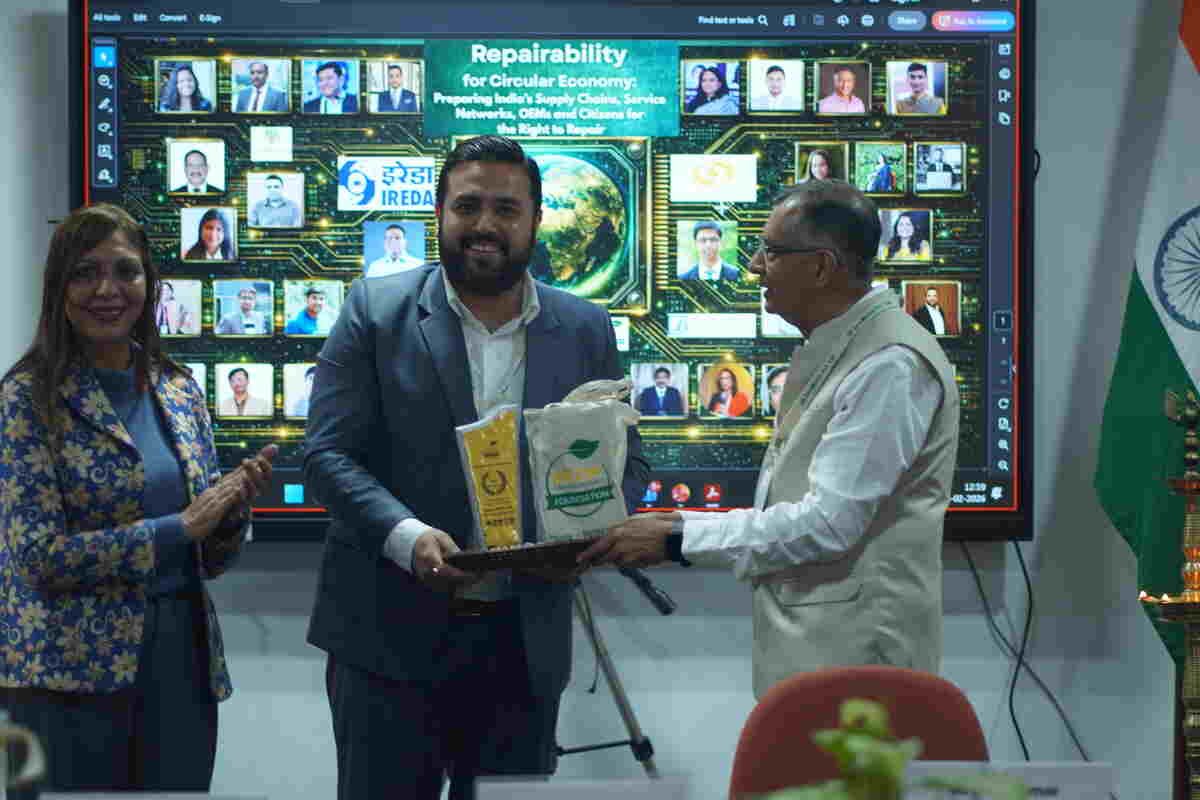
India is entering a defining phase in its sustainability journey. With the rapid rise in electronic consumption and increasingly complex supply chains, the way products are designed, used, repaired, and recycled is becoming central to building a truly circular economy.
Recognizing this shift, 3RZW Environment Foundation and 3RZeroWaste Private Limited, in collaboration with MRAI (Material Recycling Association of India), hosted a focused session featuring Divvye Kohhli. The discussion brought together key stakeholders to explore how repairability can act as a foundational pillar in advancing India’s Right to Repair movement.
The session moved beyond high-level discussions and focused on practical pathways — how supply chains, service networks, manufacturers, and consumers must align to make circular systems functional and scalable.
At the heart of the conversation was a simple but powerful idea: a circular economy does not begin with recycling — it begins with design, repair, and product longevity.
Repairability as a Core Circular Strategy
During the session, Divvye Kohhli emphasized that repairability must be integrated at the product design stage itself. Products designed for easy repair, modularity, and longer lifecycles not only reduce waste but also create economic opportunities across service and refurbishment sectors.
Repairability is not just a technical feature — it is a systemic approach that connects manufacturers, service providers, recyclers, and consumers into one continuous value loop.
For India, this represents a major opportunity to build resilient and resource-efficient systems while reducing dependency on raw material extraction.
Industry Readiness and Supply Chain Transformation
A key focus of the discussion was India’s readiness to support repair ecosystems at scale. Manufacturers must prioritize design for repair and serviceability, service networks need to expand to ensure accessibility of repairs, and supply chains must support availability of spare parts and technical knowledge.
Strengthening Circular Ecosystems through Collaboration
The session reinforced the importance of multi-stakeholder collaboration in building effective circular systems. Organizations like MRAI play a crucial role in bridging industry gaps, strengthening recycling networks, and enabling dialogue between policymakers, producers, and recyclers.
The Road Ahead: Right to Repair in India
India’s emerging Right to Repair movement presents a transformative opportunity to empower consumers, extend product lifecycles, reduce electronic waste, and create new green jobs.
However, realizing this vision will require supportive policy frameworks, industry-wide adoption, and strong consumer awareness.
Conclusion
The session with Divvye Kohhli highlighted a clear direction for India’s circular economy future — one where repairability becomes a standard, not an exception.
The circular economy is no longer just an environmental goal — it is becoming a strategic framework for economic growth, resource efficiency, and long-term sustainability.
For more information about our initiatives and services.
please visit our website: https://0waste.co.in/

