

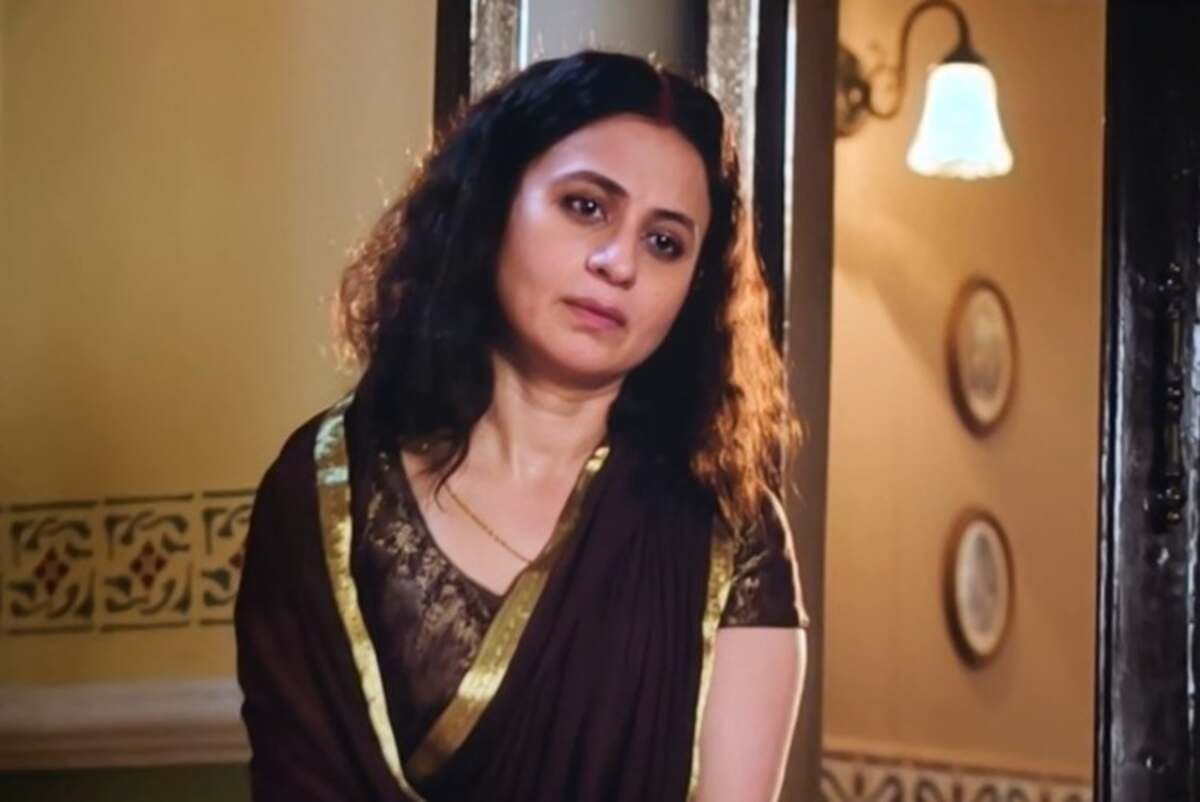
Mirzapur: The Movie has arrived in cinemas, bringing one of India’s most popular crime franchises to the big screen. Among the returning stars is Rasika Dugal, who reprises her much-loved role as Beena Tripathi. The actress has now opened up about filming intimate scenes and explained how intimacy coordinators can create a safer and more professional environment for actors.
The highly anticipated film was released in theatres on September 4, 2026, bringing back several familiar faces from the Prime Video series. Pankaj Tripathi returns as Kaleen Bhaiya, Ali Fazal as Guddu Pandit, Divyenndu as Munna Bhaiya, Rasika Dugal as Beena Tripathi and Shweta Tripathi as Golu.
Rasika Dugal on filming intimate scenes
In an interaction with ANI, Rasika Dugal spoke about the changing approach to filming intimate sequences in the entertainment industry. She highlighted the role of intimacy coordinators, comparing their work to that of choreographers and action directors.
According to the actress, intimacy coordinators help actors understand the requirements of a scene, communicate boundaries and work out how a director’s vision can be achieved while ensuring everyone involved remains comfortable.
She explained that scenes are often discussed and workshopped beforehand so that actors and their co-stars know what to expect. If an actor is uncomfortable with a particular element, alternative ways can be explored to create the desired effect without compromising anyone’s comfort.
‘If somebody is uncomfortable…’
Rasika emphasised that the process is about communication and professionalism. She explained that if someone is uncomfortable with a particular aspect of an intimate sequence, the team can look for another way to achieve the same cinematic impact.
The actress described the presence of intimacy coordinators as an important development that helps make intimate sequences more structured and comfortable for performers.
Her comments also underline the growing importance of consent, communication and clearly defined boundaries during the production of intimate scenes.
Rasika Dugal recalls making Mirzapur Season 1
Rasika also recalled that intimacy coordinators were not commonly part of productions when the first season of Mirzapur was made.
She noted that while the formal concept had already been established in some Western film industries, it had not become common practice in India at that time. However, she credited the Mirzapur team for being sensitive to the actors’ concerns.
According to Rasika, the director discussed the scenes with her beforehand, including how particular shots would be filmed. This gave her an opportunity to communicate if there was anything she was not comfortable doing.
The actress said that the team’s sensitivity helped ensure that the sequences were handled carefully, even though a dedicated intimacy coordinator was not formally part of the production in the way the role is understood today.
Mirzapur: The Movie expands the popular franchise
Directed by Gurmmeet Singh, Mirzapur: The Movie expands the story of the popular crime franchise from the streaming world to the big screen.
The film brings back several key characters while introducing new faces to the franchise. Ravi Kishan and Jitendra Kumar are among the new additions, while Abhishek Banerjee, Shriya Pilgaonkar, Rajesh Tailang, Sheeba Chaddha, Mohitt Maalik, Sonal Chauhan, Anangsha Biswas, Kulbhushan Kharbanda and Sushant Singh feature in pivotal roles.
The movie is produced by Ritesh Sidhwani and Farhan Akhtar under the Excel Entertainment banner.
With the return of its iconic characters and the franchise’s established mix of crime, action and drama, Mirzapur: The Movie marks a significant new chapter for the popular series.
Why Rasika Dugal’s comments matter
Rasika Dugal’s comments highlight how filmmaking practices surrounding intimate scenes have evolved. Intimacy coordinators can serve as a bridge between performers and filmmakers, helping establish expectations and boundaries before cameras roll.
For audiences, her insights also offer a behind-the-scenes perspective on how sensitive sequences are planned and executed professionally in modern film production.

