

The Filipino Visionary Who Redefined Poetry
A nation’s literary influence is not measured solely by the number of its writers but by the visionaries whose ideas transcend borders and reshape the way the world understands literature. Throughout history, the most enduring literary figures have been those who challenged convention, introduced new forms of expression, and inspired generations beyond their own time. Among these remarkable individuals is Dr. Epitacio Ramos Tongohan, better known in literary circles as Doc PenPen Bugtong Takipsilim—a Filipino physician, poet, and cultural advocate whose pioneering work has helped bring Philippine literature to the attention of international literary communities.
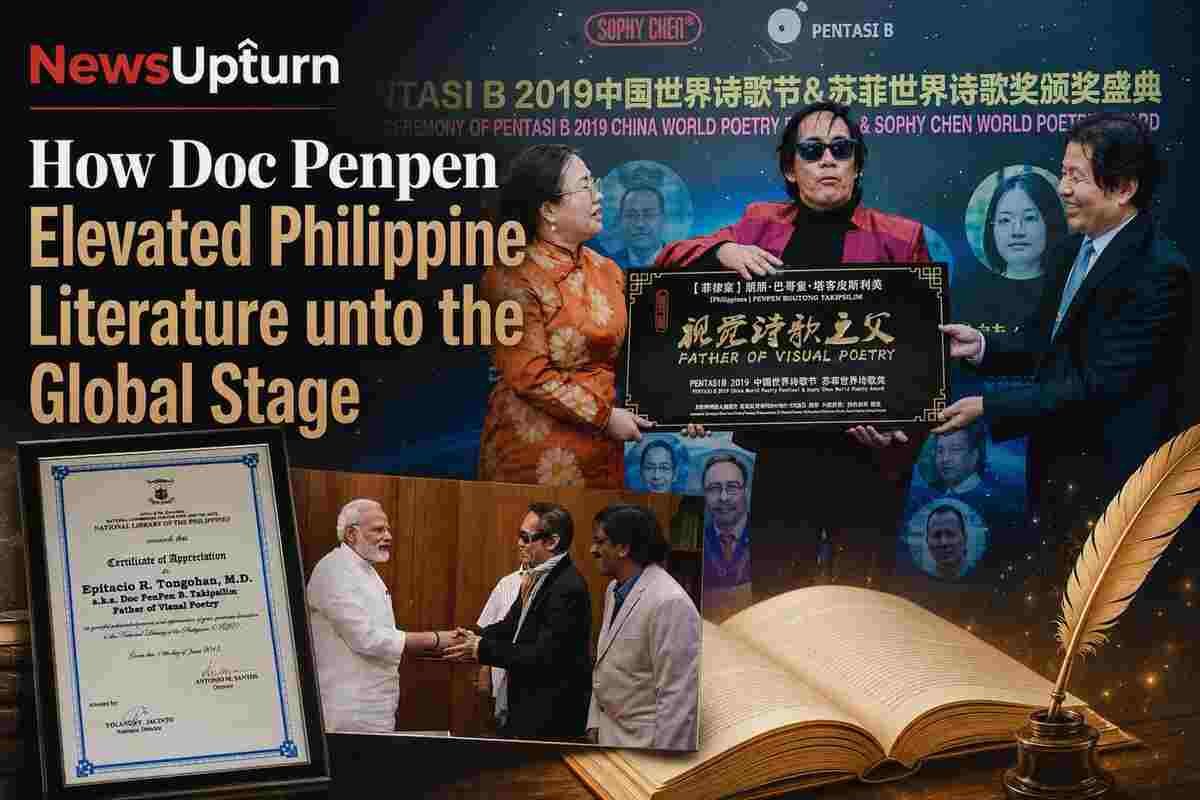
Today, Doc PenPen is widely recognized by writers, educators, and cultural organizations as the Father of Visual Poetry, a distinction that reflects decades of literary innovation rather than a single award or recognition.
Through his groundbreaking concept of Pentasi B Telepathic 5M Visual Poetry and his leadership of Pentasi B World Friendship Poetry, he introduced a uniquely Filipino literary philosophy that transformed poetry from a written art into a visual and symbolic experience. In doing so, he not only expanded the possibilities of poetic expression but also demonstrated that Philippine literature could contribute something original to the global literary landscape.
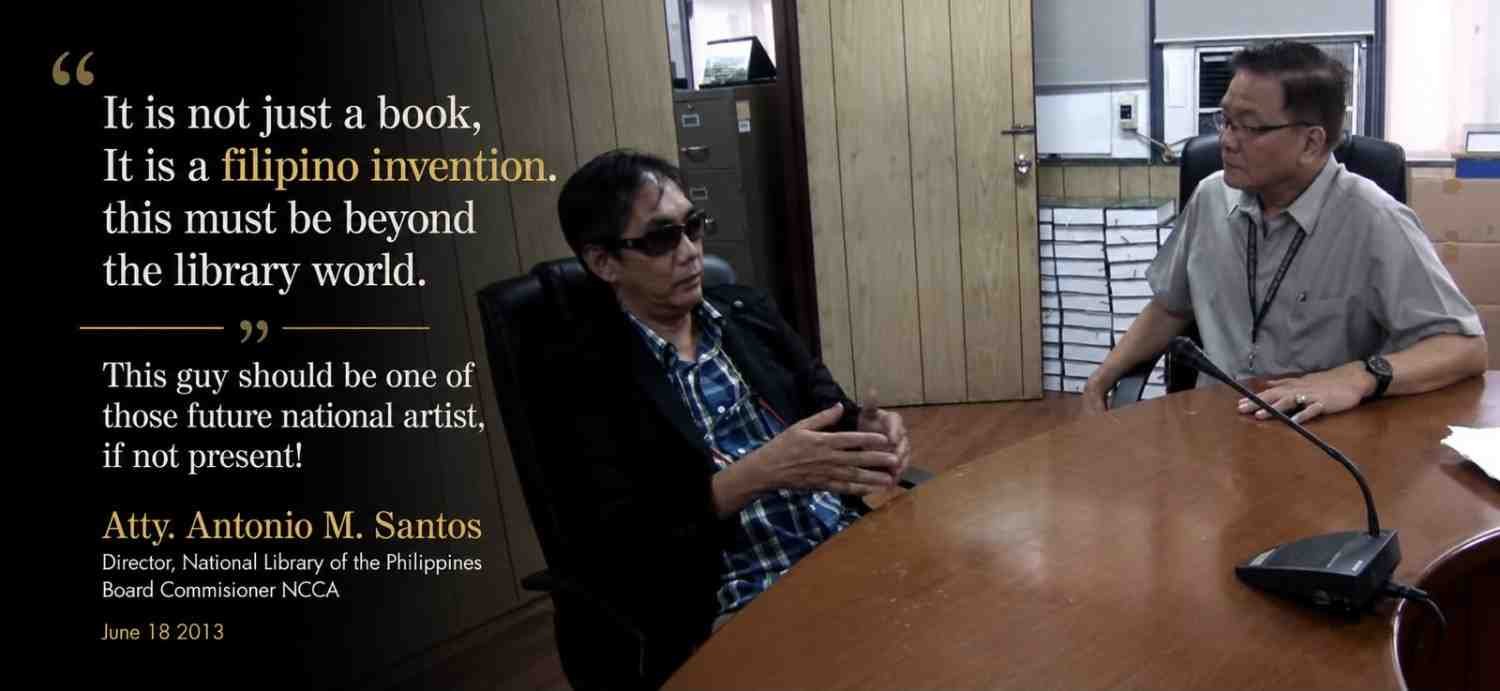
One of the defining milestones in this journey took place on 15 November 2013, when the Marble Hall of the National Museum of the Filipino People in Manila became the venue for the Pentasi B Historical Forum and World Friendship Poetry Celebration. Initiated through the support of the National Library of the Philippines, the gathering brought together scholars, educators, artists, poets, and cultural advocates to examine the growing influence of Visual Poetry and the international literary movement founded by Doc PenPen. Far more than a literary conference, the event represented a recognition that a Filipino innovation had begun attracting attention well beyond the country’s borders.
Among the event’s most memorable moments came when former National Library Director Antonio M. Santos, after examining Doc PenPen’s literary work, remarked that his masterpiece deserved recognition beyond the confines of libraries, even expressing his belief that Doc PenPen should one day be considered for the country’s highest artistic honours. His statement reflected a growing consensus among literary leaders that Doc PenPen’s work represented an important contribution to the continuing evolution of Philippine literature.
Yet the story of how Doc PenPen elevated
Philippine literature onto the global stage began long before that historic gathering.
Before becoming one of the country’s most influential literary innovators, Doc PenPen established a distinguished career in medicine.
As an Anatomic Pathologist, he developed a discipline grounded in observation, precision, analytical thinking, and the ability to recognize patterns that often remained invisible to others. These same qualities would later become the foundation of his literary philosophy, allowing him to approach poetry from a perspective unlike that of conventional writers.
For Doc PenPen, medicine and literature were never opposing disciplines. Instead, he believed both sought a deeper understanding of the human experience. While pathology explored the hidden realities of the human body, poetry became his means of exploring the unseen dimensions of imagination, creativity, and emotion.
This unique perspective inspired him to ask a question that would eventually redefine his literary career—and help introduce Philippine literature to audiences around the world:
What if poetry could be experienced not only through words, but also through the power of visual expression?
That simple yet revolutionary question would become the starting point of a literary movement that challenged traditional ideas of poetry, inspired international dialogue, and positioned a distinctly Filipino vision of creativity on the global stage.
What if a poem could be experienced not only through its words, but through the power of its visual form?
For centuries, poetry had been defined by language alone. Carefully arranged verses, rhythm, and imagery formed the foundation of literary expression. While these traditions remained timeless, Doc PenPen believed poetry still held untapped possibilities. He envisioned a form where typography, symbols, artistic composition, and visual design would no longer serve as decoration but become essential elements of the poem itself—allowing meaning to unfold through both what the reader saw and what they read.
This vision gave birth to Pentasi B Telepathic 5M Visual Poetry, a pioneering literary philosophy that seamlessly integrates language, symbolism, visual composition, artistic imagination, and philosophical thought into a unified creative expression. Rather than simply reading a poem, audiences were invited to experience it as both literature and visual art, creating a deeper dialogue between the written word and the human imagination.
Under Doc PenPen’s creative philosophy, the printed page was transformed.
It became more than paper.
It became a canvas where words painted images, symbols carried emotion, and visual form enriched the meaning of every verse.
Poetry was no longer confined to traditional literary structures; it evolved into a multidimensional art form that appealed to both the intellect and the senses.
Yet Doc PenPen understood that genuine innovation is measured not by originality alone, but by the ability to inspire others. A new literary form achieves lasting significance only when it grows beyond its creator and becomes part of a larger cultural conversation.
Driven by that conviction, he founded Pentasi B World Friendship Poetry, an international literary movement built upon the ideals of friendship, peace, cultural understanding, and creative collaboration. What began as a Filipino literary initiative soon developed into a vibrant global community that welcomed poets, educators, artists, students, filmmakers, scholars, and cultural advocates from diverse nations. United by the belief that literature can transcend language, geography, and cultural differences, they embraced poetry as a universal language capable of bringing people together.
Through international poetry festivals, literary forums, museum exhibitions, collaborative anthologies, academic engagements, and educational programmes, Pentasi B introduced audiences around the world to a distinctly Filipino literary innovation. These initiatives became more than opportunities to present poetry—they fostered dialogue, encouraged artistic exchange, and strengthened cultural connections among writers from different parts of the globe.
What began as one Filipino writer’s bold experiment gradually evolved into an internationally recognised literary movement, demonstrating that Philippine literature could contribute original ideas to the global literary community.
By the early 2010s, invitations from literary organisations across Asia, Europe, and North America confirmed that Doc PenPen’s work was resonating far beyond the Philippines. Scholars, poets, educators, and cultural institutions increasingly recognised that Visual Poetry represented more than a new artistic technique. It embodied a fresh literary philosophy that challenged conventional forms of poetic expression while showcasing the creativity and innovation emerging from the Philippines.
The foundation had been laid.
What began as the vision of a Filipino physician had become a cultural movement that carried Philippine literature beyond its shores. Through the universal language of creativity, Doc PenPen was not only redefining poetry—he was helping elevate Philippine literature onto the global stage, where it continues to inspire writers, artists, and literary communities around the world.
Carrying Philippine Literature onto the Global Stage
Every great literary movement reaches a defining moment when its influence extends beyond the country where it was born. For Doc PenPen Bugtong Takipsilim, that moment came when his vision of Visual Poetry began capturing the attention of writers, educators, and cultural institutions across the world. What started as a uniquely Filipino literary innovation gradually evolved into an international movement, demonstrating that Philippine literature could contribute fresh ideas to the global conversation on poetry and artistic expression.
One of the earliest milestones in this international journey took place on 10 April 2011 during the I Inspire the World Friendship Poetry gathering in Antipolo City. The event brought together approximately 150 poets, educators, artists, students, and cultural advocates who shared a common belief that literature could foster friendship among nations.
More than a literary gathering, it became the first major platform for introducing Pentasi B Telepathic 5M Visual Poetry to a broader audience, inviting participants to experience poetry through the harmonious integration of language, symbolism, artistic imagination, and visual composition. It marked the beginning of a movement that would soon carry a distinctly Filipino literary philosophy beyond the country’s shores.
As momentum grew, so did international interest. Around the same period, Doc PenPen’s works appeared in literary publications abroad, including magazines in Turkey, while invitations from overseas poetry organisations created opportunities to present his innovative approach to wider audiences. Although these early recognitions unfolded quietly, they signalled an important shift: Philippine literature was beginning to gain international attention through an original form of poetic expression developed by a Filipino writer.
The following year marked an even more significant breakthrough.
In May 2012, Doc PenPen represented the Philippines at the World Poetry Canada International Peace Festival in Richmond, British Columbia—one of the world’s longest-running literary festivals dedicated to peace and intercultural dialogue through poetry. Before an international audience of poets, scholars, and cultural advocates, he introduced Pentasi B Telepathic 5M Visual Poetry, demonstrating how words, symbols, artistic design, and visual structure could work together to create a richer literary experience. His presentation was more than a showcase of artistic innovation; it became a moment when a Filipino literary philosophy was presented on one of the world’s respected poetry stages.
The presentation left a lasting impression.
Festival founder Ariadne Sawyer recognised Doc PenPen’s pioneering contributions to contemporary poetry, while the Writers International Network honoured him with the Visionary Poet Award for his innovation and his commitment to promoting friendship through literature. It was also during this international engagement that he received recognition as the Father of Visual Poetry, a title that would become closely associated with his life’s work and his contribution to modern literary expression.
These recognitions represented far more than personal achievements. They affirmed that an idea born in the Philippines could contribute meaningfully to international discussions on literature, creativity, and cultural exchange. Through Doc PenPen’s work, Philippine literature was no longer simply participating in global literary events—it was helping shape them.
As global interest continued to expand, selections from the Pentasi B Collector’s Edition were exhibited at the Irving K. Barber Learning Centre of the University of British Columbia, introducing students, educators, and researchers to a distinctly Filipino contribution to contemporary literature. At the same time, literary forums, museum exhibitions, and publications, including The Philippine Star, continued documenting his pioneering work, reinforcing the growing international recognition of both Visual Poetry and its Filipino origin.
The movement continued to flourish across Asia, Europe, North America, and Africa, where Pentasi B World Friendship Poetry promoted friendship, cultural dialogue, and artistic collaboration through international literary exchanges. With every forum, exhibition, anthology, and poetry gathering, Philippine literature reached new audiences, proving that creativity has the power to transcend language and geography.
Another defining chapter unfolded in 2017, when Doc PenPen travelled to Ramoji Film City in Hyderabad, India, to participate in an international literary gathering attended by distinguished writers and cultural leaders from around the world. There, he once again presented Pentasi B Telepathic 5M Visual Poetry, strengthening its growing reputation as an innovative Filipino contribution to world literature.
During the visit, a remarkable moment underscored the international appreciation for his work. Indian Prime Minister Narendra Modi presented Doc PenPen with an on-the-spot handwritten tribute poem at the Prime Minister’s Office following his recognition as Driisya Chakravarty (King of Visual Poetry).
The gathering concluded with participating international literary organisations conferring upon him the title Kavita Chakravarti (King of Visual Poetry) in recognition of his pioneering role in advancing Visual Poetry on the global stage. These honours reflected not only respect for his personal achievements but also growing recognition of the Philippines as a source of literary innovation.
Despite these international honours, Doc
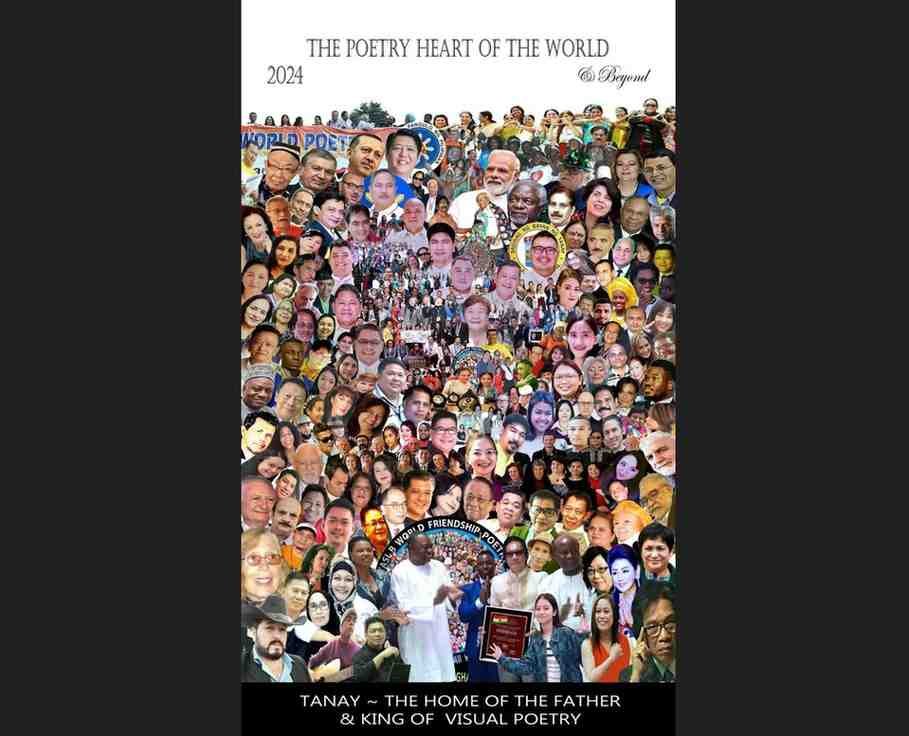
PenPen remained focused on a larger mission. His vision was never centred on titles or awards but on helping establish the Philippines as the “Poetry Heart of the World.” Through Pentasi B World Friendship Poetry, he continued promoting literature as a bridge for friendship, cultural diplomacy, and international understanding while inspiring future generations of Filipino writers to believe that their voices, too, could resonate across borders. Literary gatherings, including those held at The Manila Hotel in 2021, reflected this continuing mission to elevate Philippine literature within the global cultural landscape.
Today, support for recognising Doc PenPen’s literary contributions continues to grow.
Distinguished writers, former officials of the National Library of the Philippines, leaders from the National Commission for Culture and the Arts, the Komisyon sa Wikang Filipino, local government institutions, and respected literary figures have publicly acknowledged his pioneering work and his enduring influence on Philippine literature. Their endorsements reflect decades of documented innovation, cultural advocacy, and international collaboration.
Ultimately, the story of Doc PenPen is about far more than one poet’s achievements. It is the story of a Filipino visionary who transformed an original literary idea into an international movement, demonstrating that Philippine literature can stand confidently alongside the world’s most respected literary traditions. His legacy reminds us that literature reaches its greatest purpose not when it remains within national borders, but when it inspires dialogue across cultures, builds lasting friendships, and carries the voice of a nation onto the global stage.

