

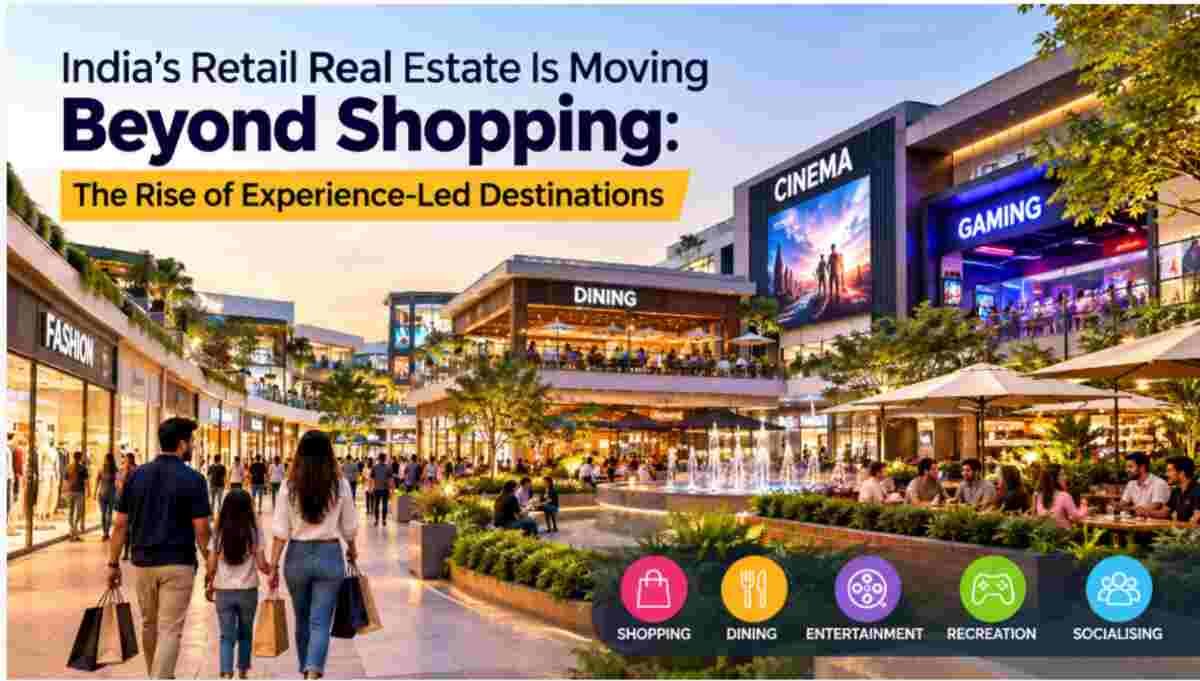
India’s retail real estate market is entering a more sophisticated phase, supported by strong leasing momentum, expanding consumption and a broader appetite for organised retail. Walk into a retail destination today and the experience is increasingly about more than the stores inside it. A meal, a movie, a gaming session or simply spending time with friends can now be as much a part of the visit as shopping itself. Consumer expectations are changing, and retail real estate is responding by creating destinations that give people more reasons to stay, explore and return.
The numbers also tell us where the change is happening. Retailers leased around 3.9 million sq. ft. across India’s leading markets in H1 2026, up 20% year-on-year, while nearly 0.9 million sq. ft. of new retail supply was added during the period, according to CBRE. Of this activity, Delhi-NCR, Chennai and Mumbai together accounted for nearly 66% of leasing activity. At the same time, the categories occupying this space are changing, with greater room being created for businesses built around spending time as much as making a purchase.
In particular, F&B accounted for 18% of retail leasing across India’s top seven cities in H1 2026, while entertainment contributed another 16%, according to JLL. Meanwhile, entertainment space take-up rose 41.5% year-on-year, adding further weight to dining, recreation and leisure as increasingly important components of the retail experience.
Meanwhile, the shift in expectations is opening new avenues for organised retail beyond established metropolitan centres. Rising aspirations, urbanisation and changing lifestyles are giving emerging markets greater consumption depth, while consumers are seeking greater variety, convenience and quality closer to home. In turn, this is expanding the role that organised retail can play within everyday life.
Mrinaal Mittal, Managing Director, Homeland Group – CP67, says, “Experience-led retail is influencing consumption and footfall patterns across emerging markets, where consumers are increasingly seeking a wider mix of retail, leisure, dining and entertainment. By bringing these categories together, destinations can accommodate more frequent and varied consumption occasions, allowing physical retail to become more closely woven into everyday lifestyles. In Mohali and the wider Chandigarh Tricity, this evolution indicates a consumer base that is becoming increasingly discerning about the quality, convenience and variety of experiences available within its catchment.”
Beyond consumer behaviour, the geographical footprint of organised retail is expanding as well. New catchments are developing their own consumption identities, while developers are gaining greater scope to create formats shaped around local demographics, aspirations and lifestyle patterns. This geographical diversification, in turn, is creating a more varied retail landscape across the country.
Nandini Taneja, CEO, Bhumika Enterprises, says, “Today, the expansion of organised retail into new catchments is being accompanied by a significant evolution in consumer demand. Rising incomes, urbanisation and greater exposure to contemporary retail are creating consumers with increasingly diverse expectations. Consequently, developers are paying closer attention to demographics, spending patterns, lifestyle preferences, and local aspirations as they shape retail environments. This approach allows convenience, variety and experience to come together in ways that resonate with individual markets”.
As organised retail expands into new catchments, accessibility becomes as important as the destination proposition. A compelling tenant mix and a strong experience can generate interest; however, convenient connectivity determines how naturally a destination fits into consumers’ daily routines. As retail formats diversify towards high streets, mixed-use developments and transit-linked destinations, accessibility is becoming increasingly intertwined with the overall retail proposition.
Ajendra Singh, Vice President–Sales and Marketing, Spectrum Metro, says connectivity and accessibility are becoming integral to the performance of contemporary retail destinations. High-street formats, mixed-use developments and well-connected retail corridors can integrate consumption more naturally into everyday urban movement. Consequently, shopping, dining, entertainment and services can come together within a single outing, allowing destinations to engage wider catchments. This change is particularly evident across Noida and the wider Delhi-NCR corridor, where expanding urban infrastructure is influencing new patterns of movement and consumption.
Taken together, the shifts in consumer behaviour, the expansion into newer catchments and the growing importance of accessibility are reshaping the role of physical retail. A destination is increasingly expected to bring commerce, food, entertainment, leisure and social interaction into a cohesive environment, creating relevance across multiple occasions.
Ultimately, India’s next retail cycle will be shaped by destinations that fit naturally into consumers’ lifestyles while offering enough variety and engagement to sustain repeated visits. As organised retail expands and consumer expectations continue to mature, experience is emerging as an integral component of the value proposition of physical retail.

