Author Anamika Narendra Singh: Giving Voice to Humanity Through देव बाबू
Author Anamika Narendra Singh discusses the inspiration behind her Hindi book देव बाबू, a heartfelt story exploring humanity, compassion, selfless service, sacrifice and loneliness. Through the character of Dev Babu, a doctor who treats patients regardless of…
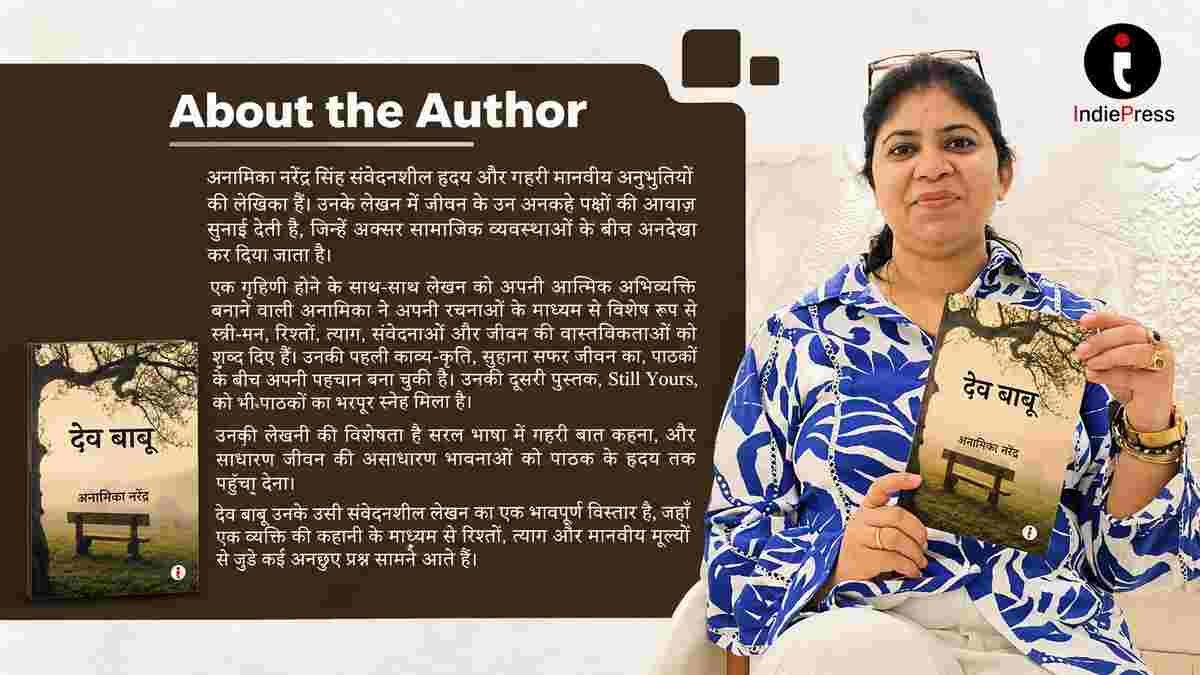
In a world that often celebrates achievement and material success, the quiet acts of kindness and sacrifice that sustain human relationships can go unnoticed. Through her Hindi book देव बाबू, author Anamika Narendra Singh explores the meaning of compassion, selfless service, loneliness, and the emotional needs of those who dedicate their lives to others.
At the heart of the story is देव बाबू, a doctor whose commitment to humanity extends beyond his profession. His clinic becomes a place of hope where a person's ability to pay does not determine their access to care. Yet beneath his generosity lies a deeper question: who understands the pain of someone who is always there for everyone else?
Alongside her writing, Anamika explores the emotional dimensions of relationships, sacrifice, and self-discovery. In this interview, she shares the inspiration behind देव बाबू, her creative process, and her hope that the story will encourage readers to recognise the people whose kindness often goes unacknowledged.
1. What inspired you to write this particular book, and how did the idea for the story come to you?
The inspiration behind “देव बाबू” came from my reflections on people who dedicate their lives to serving others, often forgetting their own needs and emotions. I have always felt that the most beautiful stories are hidden in ordinary lives, in the sacrifices people make, and in the feelings they rarely express.
Through “ देव बाबू “ I wanted to portray a person whose compassion goes beyond his profession. As a doctor, he believes that no one should be denied treatment simply because they cannot afford it. His clinic becomes a place of hope, where humanity matters more than money.
But beneath this selfless personality lies another important question: who takes care of the person who is always there for everyone else? एक सवाल -
“जो सबके जीवन में रोशनी बाँटता रहा, क्या किसी ने उसके अपने अँधेरों को समझा?”
This question lies close to the heart of my story. I wanted to celebrate selflessness while reminding readers that even those who give endlessly deserve love, companionship, and care.
2. Can you share some insights into your writing process? Do you follow a specific routine or have any unique rituals that help you get into the creative flow?
My writing process begins with observing life and understanding emotions. I find inspiration in everyday situations, human relationships, and the silent struggles that often go unnoticed. Sometimes, a simple incident or an unspoken emotion can become the foundation of an entire story.
I do not always follow a fixed routine. For me, writing is an emotional journey. I try to understand my characters, their circumstances, and the feelings behind their actions before putting them into words. I want my readers to experience their joys and sorrows rather than simply read about them.
As a Hindi writer, I believe that simple words can express the deepest emotions.
“कहानियाँ केवल कल्पना से नहीं बनतीं, कुछ भावनाएँ जीवन से उधार लेनी पड़ती हैं।”
For me, the real joy of writing comes when a reader connects with a character and discovers a part of their own life within the story.
3. The characters in your book are quite distinct and memorable. Are they based on real people, or did they evolve purely from your imagination?
The characters in “देव बाबू” are shaped by imagination, human emotions, and observations of real life. I believe that every person we encounter, every relationship we witness, and every untold story around us can teach us something about human nature.
देव बाबू is a fictional character, but the values he represents—compassion, selflessness, dignity, and service—are very real. I wanted to create a character who reminds readers that goodness still exists in a world often occupied with personal ambitions and material concerns.
I also wanted to explore the emotional world of someone who appears strong and dependable to everyone else but may experience loneliness in his own life.
“कुछ लोग दूसरों के लिए छाँव बन जाते हैं, लेकिन उनकी अपनी थकान देखने वाला कोई नहीं होता ?? ”
My hope is that readers will not only remember देव बाबू as a character but also recognize the people in their own lives who quietly give so much to others.
4. Your book delves into (specific theme or issue.) What motivated you to explore this theme, and what messages do you hope readers will take away from your work?
At its heart, “देव बाबू” explores humanity, selfless service, sacrifice, loneliness, and the emotional needs of people who devote their lives to others but these are Very rare or you can say vanished from this real world.
We often admire those who are always available for everyone. However, we sometimes forget that they, too, need understanding, affection, and companionship. Through देव बाबू journey, I wanted readers to reflect on how we value people who give without expecting anything in return.
One of the central messages of my book is that kindness has the power to transform lives. At the same time, I believe that living for others should not mean completely forgetting oneself. A person's emotional needs are just as real as their responsibilities towards others.
“दूसरों के लिए जीना बहुत खूबसूरत है, लेकिन उस सफ़र में खुद को खो देना नहीं।”
If this book inspires even one reader to become more compassionate, appreciate a selfless person, or recognise the loneliness hidden behind someone's strength, I will consider my effort worthwhile.
5. The world-building in your novel is incredibly rich and immersive. How did you go about creating the setting, and did you draw inspiration from real-world locations or historical events?
While developing the world of “देव बाबू”, I wanted the setting to feel familiar, believable, and emotionally connected to everyday life. Rather than depending on extraordinary events, I wanted the story to draw its strength from ordinary human experiences.
The clinic is especially meaningful because it represents more than a place for medical treatment. It becomes a symbol of hope, where a person's financial circumstances do not determine whether they deserve care. The image of a banyan tree (बरगद का पेड़) also reflects देव बाबू personality: someone who offers shade and shelter to those who need it.
My focus was on creating an emotional atmosphere that readers could recognise from the world around them. The setting serves the story's central idea—that humanity is expressed not merely through words, but through the choices we make for others.
“एक बरगद की पहचान उसकी ऊँचाई से नहीं, उसकी छाँव में सुकून पाने वालों से होती है।”
I wanted readers to feel that the places in the story could exist in their own communities, because compassion and human struggles are not limited to one particular place or time.
6. As a writer, how do you balance the need for originality with the expectations of the genre? Were there challenges in putting your unique spin on familiar elements?
I believe originality does not always mean writing about something that has never been explored before. Sometimes, originality lies in looking at familiar human experiences from a different emotional perspective.
Love, sacrifice, kindness, loneliness, and relationships are universal themes, but every writer experiences and expresses them differently. My approach is to observe life closely, write with sincerity, and allow my characters to develop naturally.
With “देव बाबू”, I wanted to move beyond the familiar image of a selfless person who is admired by everyone. I also wanted to explore the human being behind that goodness—the person who has emotions, needs, and moments of vulnerability.
As a Hindi writer, I value simple, heartfelt language that allows readers to connect with the story without feeling distant from it.
“कहानी नई हो या पुरानी, दिल तक पहुँचने का रास्ता हमेशा सच्ची भावनाओं से होकर जाता है।”
For me, the real challenge is to tell a story that feels authentic, touches the heart, and leaves readers with something meaningful to think about.
7. The pacing of the story is well-crafted, keeping readers engaged from start to finish. Can you share your approach to maintaining tension and momentum throughout the narrative?
●My approach to storytelling is to balance the events of a character's life with the emotions that those events create. I believe a story should not move forward only through incidents; it should also reveal the inner journey of its characters. I’ve captured an 85-year journey in just 80 pages—keeping the narrative brief and fast-paced so today’s fast-moving readers can effortlessly enjoy the whole story
In “देव बाबू”, his acts of service help readers understand his values, while the quieter moments offer a glimpse into the emotional world behind his selfless personality. I wanted readers to gradually understand that even a person who brings comfort to others may have his own unspoken struggles.
I believe that pauses, reflections, relationships, and emotional turning points are just as important as dramatic moments. They give readers time to connect with the characters and understand why their experiences matter.
“किसी इंसान की कहानी सिर्फ उसके किए हुए कामों में नहीं, उन खामोशियों में भी छिपी होती है जिन्हें वह दुनिया से कह नहीं पाता।”
My aim is to create an emotional connection that encourages readers to continue the journey, not merely because they want to know what happens next, but because they genuinely care about the person whose story they are reading.
8. In the age of rapidly changing media and reader preferences, how do you see the role of traditional storytelling evolving, and how do you adapt your writing to connect with contemporary audiences?
I believe storytelling will always remain relevant, even as the ways in which people discover and read stories continue to change. Today, readers encounter literature through printed books, e-books, social media, and digital communities. These platforms have created new opportunities for writers to reach people across different backgrounds and generations.
However, technology may change the way stories are delivered, but the emotions that make stories meaningful remain timeless. Love, loneliness, family relationships, sacrifice, hope, and the desire to be understood are experiences that continue to connect us as human beings.
As a writer, I want to remain open to changing reader preferences while staying true to the emotional honesty of my stories. I believe in using accessible language, relatable characters, and situations that encourage readers to reflect on their own lives.
For me, connecting with contemporary readers does not mean following every trend. It means understanding the world they live in while continuing to write about the feelings that make us human.
“समय बदलता है, कहानियाँ कहने के तरीके बदलते हैं, लेकिन दिल को छू लेने वाली भावनाएँ कभी पुरानी नहीं होतीं।”
My hope is that “देव बाबू” reaches readers not just as a book, but as a reminder to value kindness, recognise unspoken pain, and never take the people who care for us for granted.
Discover देव बाबू by Anamika Narendra Singh, a heartfelt Hindi story about compassion, selfless service, sacrifice, and the emotional struggles that can remain hidden behind a life devoted to others.
Buy देव बाबू on Amazon today and experience a moving story that invites readers to recognise the quiet sacrifices of others, value genuine human connection, and reflect on the importance of caring for oneself as well as those around us.